
The Complete Roof Replacement Edinburg Checklist: 2026 Homeowner’s Guide
- HighLine Roofing

- Jun 25
- 12 min read
Is your roof truly failing, or are you simply hearing what a "storm chaser" wants you to believe after the last South Texas thunderhead? It's stressful to stand in your driveway and wonder if a professional roof replacement Edinburg project is actually necessary. Between the relentless sun and the confusion of insurance paperwork, making the wrong call feels like a high-stakes gamble. You deserve a partner who prioritizes your home's long-term security over a quick sale.
We understand you need facts, not pressure. This guide provides a clear framework to help you decide when it's time to act. You'll learn how to spot heat-related failure, navigate the 2026 Texas licensing laws, and choose materials built to survive the Valley's extreme climate. We've organized everything you need to know about local permits and insurance claims into one straightforward checklist. From understanding the new 2026 building codes to avoiding illegal deductible waivers, we've gathered the details you need to move forward with confidence.
Table of Contents
Is It Time for a Roof Replacement in Edinburg? Your 10-Point Warning Sign Checklist
Structural & Material Assessment: The Homeowner's Choice Checklist
Navigating the Costs: Your Financial and Insurance Claim Checklist
Choosing an Edinburg Roofing Contractor: The Vetting Checklist
Preparing for Installation Day: The Homeowner’s Final Checklist
Is It Time for a Roof Replacement in Edinburg? Your 10-Point Warning Sign Checklist
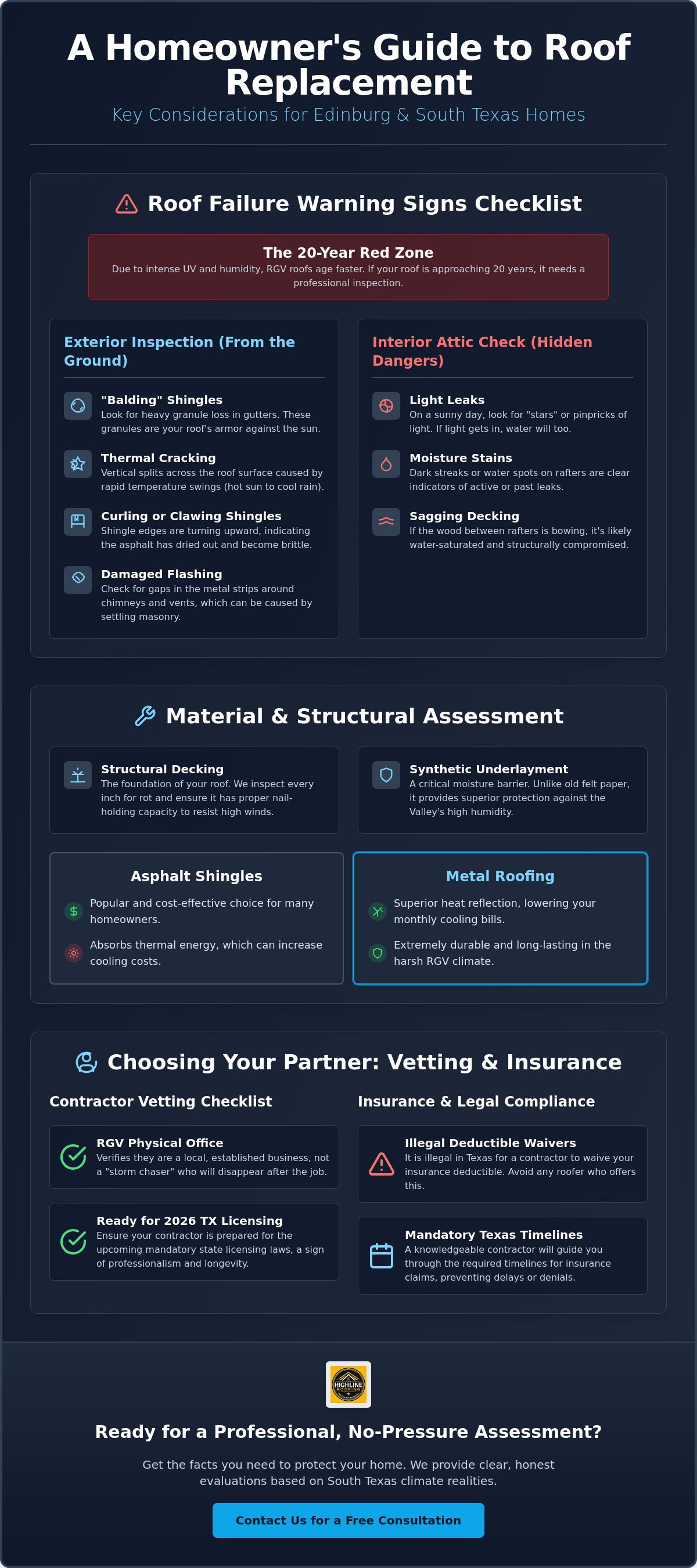
Living in the Rio Grande Valley is a test of endurance for any building. While national averages suggest a roof might last 30 years, the reality for local homeowners is quite different. Intense UV radiation and high humidity shorten the lifespan of most roofing materials and construction. If your roof is approaching the 20-year mark, it's already in the "red zone" for failure. This 20-year rule exists because RGV roofs age significantly faster than those in milder climates.
One of the most obvious signs of trouble is "balding" shingles. Look for heavy granule loss in your gutters or at the base of your downspouts. These granules act as armor against the South Texas sun. When they wash away, the underlying asphalt is exposed to direct heat. This leads to brittle shingles that crack under the slightest pressure. It's a localized problem that requires a proactive approach to a roof replacement Edinburg project before leaks begin.
Thermal cracking is another major concern in our region. Our temperatures can swing wildly between a 100-degree afternoon and a sudden 70-degree rain shower. This rapid cooling shocks the material, causing shingles to split vertically. Unlike wind damage, which might affect a few areas, thermal cracking often occurs across the entire roof surface. You should also watch for wind lift. Even if a shingle isn't missing, a Gulf storm can break its adhesive seal. Once that seal is gone, the shingle no longer protects your home from driving rain.
The Exterior Inspection: What to Look for from the Ground
You can perform a preliminary check without ever stepping on a ladder. Grab a pair of binoculars and scan your roofline for these specific issues:
Clawing or curling: Look for shingle edges that are turning upward or losing their flat profile. This indicates the asphalt has dried out and is no longer flexible.
Damaged flashing: Check the metal strips around your chimney and vents. Edinburg-style masonry chimneys are heavy and can settle, causing flashing to pull away and create dangerous gaps.
Hail pockmarks: Look for dark, circular spots on the shingles. These indicate that a spring hailstorm has bruised the material, knocking away the protective granules.
The Interior Attic Checklist: Hidden Signs of Failure
The most dangerous damage is often hidden from plain sight. On a bright, sunny day, head into your attic with a flashlight to look for these red flags:
Light leaks: If you see "stars" or pinpricks of daylight coming through the roof decking, you have an immediate structural problem. If light can get through, water certainly will.
Moisture stains: Look for dark streaks, water spots, or white, powdery "efflorescence" on the rafters. These are clear indicators of active or past leaks that haven't dried properly.
Sagging decking: A roof should have a straight, flat profile. If the wood between the rafters looks like it's bowing, the decking is likely saturated and structurally compromised from long-term moisture.
Structural & Material Assessment: The Homeowner's Choice Checklist
A high-quality roof is a complex system. It isn't just about the top layer of shingles. In our climate, every component must work together to resist 100-degree days and tropical moisture. Your roof replacement Edinburg project is the perfect time to evaluate the "bones" of your home. If the foundation is weak, even the most expensive shingles will fail prematurely. We focus on a complete system approach to ensure your investment lasts for decades.
The structural decking is the most critical part of this foundation. In the Rio Grande Valley, high humidity often leads to "soft spots" or wood rot that stays hidden under old shingles. We check every inch of the plywood to ensure it has the proper nail-holding capacity. If the wood is saturated or brittle, it won't hold the fasteners during a high-wind event. Understanding the importance of roofing decking replacement RGV is essential for long-term safety and building code compliance.
Choosing between asphalt and metal is your next major decision. Asphalt shingles are popular because they are cost-effective and easy to repair. However, metal roofing offers superior heat reflection. Metal doesn't absorb thermal energy the same way asphalt does. This choice directly impacts your monthly cooling costs. Regardless of the material, you must insist on synthetic underlayment. Unlike traditional felt paper, synthetic barriers don't rot or degrade when exposed to Edinburg's humidity. They provide a secondary waterproof shield that keeps your home dry even if shingles are displaced.
The Roof Decking Checklist: Replacement vs. Recovery
Deciding whether to keep your existing decking or replace it requires a careful eye. We look for signs of delamination, where the layers of plywood begin to peel apart. We also check for "decking sag" between the rafters. If your home has older "1x" board decking, we often recommend oversheeting with new plywood. This creates a flat, stable surface that meets modern manufacturer warranty requirements. A professional inspection can help you determine the exact condition of your roof's foundation before the build begins.
Choosing the Right Shingles for South Texas
If you choose asphalt, look for "Cool Roof" technology. These shingles use specialized granules to reflect UV rays away from your home. You should also consider impact-resistant (Class 4) shingles. While they cost more upfront, they offer better protection against the hailstorms common in "Hail Alley." For a deeper look at how these materials compare in our region, see our shingle roof replacement Pharr guide. Proper ventilation is the final piece of the puzzle. Without ridge vents or solar fans, heat stays trapped in your attic. This heat "cooks" your shingles from the inside out and spikes your AC bills.
Navigating the Costs: Your Financial and Insurance Claim Checklist
Understanding the financial side of a roof replacement Edinburg project is just as vital as choosing the right shingles. In Texas, the process is governed by strict timelines and laws that protect homeowners from fraud. You generally have one year from the date of loss to file a roof insurance claim under Texas Insurance Code §16.005. Once you file, your insurance carrier must acknowledge the claim within 15 days. They then have 15 business days to accept or reject it after receiving all necessary information. After acceptance, payment must be sent within 5 business days. Staying on top of these dates ensures your project moves forward without unnecessary delays.
One of the most important things to remember is that "waiving" a deductible is illegal in Texas. Under House Bill 2102, roofing contractors are prohibited from paying, waiving, or rebating a homeowner's insurance deductible. Doing so is a Class B misdemeanor. Insurance companies now rigorously require proof of deductible payment before they release final claim funds. If a contractor offers to "cover your deductible," it's a major red flag. This tactic is often used by "storm chasers" who may use sub-par materials to make up the cost difference. Always prioritize a contractor who follows the law and provides transparent pricing.
You should also be aware of the "free inspection" trap. While many local companies offer no-cost assessments, some out-of-state groups use these to pressure you into signing a contract immediately. As of June 1, 2026, all roofing contractors in Texas must be licensed by the Texas Department of Licensing and Regulation (TDLR). Always ask to see this license before allowing anyone onto your roof. A qualified local inspector will provide a detailed report without forcing you into a snap decision.
The Insurance Claim Success Checklist
Document damage: Take photos of your roof, yard, and any fallen debris immediately after a storm.
Review your policy: Determine if you have Replacement Cost Value (RCV) or Actual Cash Value (ACV). ACV policies only pay the depreciated value of the roof, which can lead to higher out-of-pocket costs for roofs older than 10 years.
Check for Ordinance or Law coverage: This covers the cost of bringing your roof up to the 2024 International Residential Code (IRC) standards now required in Texas.
Meet the adjuster: Have your roofing contractor present when the insurance adjuster arrives to ensure all damage is properly identified.
Budgeting for Out-of-Pocket Replacements
If you aren't filing an insurance claim, several factors will influence your total investment. Labor rates in Edinburg depend on the complexity of your roof, its pitch, and the number of existing layers that need removal. We recommend exploring flexible financing plans for these projects. Flexible financing options allow you to choose premium, storm-resilient materials like Class 4 shingles without the immediate burden of a large cash payment. This approach ensures your home is protected by the best materials available while keeping your monthly budget manageable.
Choosing an Edinburg Roofing Contractor: The Vetting Checklist
Selecting the right team for your roof replacement Edinburg project is about more than just the lowest bid. It's about finding a partner who remains in the Rio Grande Valley long after the storm clouds clear. A physical office in the RGV is your first line of defense. Many out-of-state companies operate out of trucks or temporary hotel rooms during peak storm season. If a warranty issue arises two years later, these "storm chasers" are often impossible to locate. A local address ensures accountability and a commitment to our community's long-term safety.
Verify the new 2026 licensing requirements before signing any paperwork. As of June 1, 2026, every roofing contractor in Texas must hold a valid license from the Texas Department of Licensing and Regulation (TDLR). General liability insurance is a basic requirement, but it isn't enough on its own. In Edinburg, contractors must submit proof of insurance or a surety bond to the Building Safety Department to pull the necessary permits. If a contractor asks you to pull the permit yourself, it's a sign they aren't properly registered with the city. Professional contractors handle all city paperwork and inspections to ensure your roof meets the 2024 International Residential Code.
You must also understand the difference between warranties. A manufacturer warranty covers defects in the shingles or metal panels themselves. A labor warranty covers the actual installation work. Always get the labor warranty in writing. It protects you if a leak occurs due to improper flashing or a missed nail. If you want a team that prioritizes transparency and local expertise, contact our local roofing experts for a detailed project plan.
The 5 Questions Every Edinburg Homeowner Should Ask
Experience: How many roof replacements have you completed in Edinburg this year?
References: Can you provide a list of local references in the Rio Grande Valley?
Protection: What is your specific process for protecting my landscaping and driveway during the tear-off phase?
Supervision: Will there be a dedicated project manager on-site during the entire installation?
Cleanup: How many times will you run a magnetic sweep to ensure no nails are left in my lawn?
Avoiding "Storm Chasers" and Scams
Protect yourself by identifying common red flags early in the process. High-pressure sales tactics or "today only" pricing are designed to stop you from doing your research. Never provide full payment before materials arrive at your home. A reputable contractor may ask for a deposit, but the bulk of the payment should follow the delivery of materials or project completion. Always verify the contractor's standing with local RGV business bureaus. If they don't have a history of service in the Valley, they don't have a reputation to protect. Reliable partners build their business on trust and long-term results, not quick fixes after a hailstorm.
Preparing for Installation Day: The Homeowner’s Final Checklist
The planning phase is complete. Now it's time for the actual construction to begin. Most professional crews can complete a roof replacement Edinburg project in just one or two days, but those days are busy and loud. Preparation is the key to protecting your property and keeping your family safe. Our goal is to minimize the disruption to your daily routine while ensuring a flawless installation.
Property protection starts on the ground. You should move all vehicles out of the driveway and away from the house. This provides a clear path for the shingle delivery truck and the debris trailer. It also protects your cars from any stray materials that might slide off the roof during the tear-off phase. Don't forget your backyard. Move patio furniture, grills, and potted plants to a safe distance. If you have delicate landscaping near the drip line, we recommend covering it with tarps or plywood to prevent damage from falling shingles. These small steps prevent accidental damage and keep the workspace efficient.
Safety is our highest priority. The noise from pneumatic nail guns and hammers can be stressful for pets and small children. We suggest keeping them indoors or arranging for them to stay elsewhere during the build. You should also verify that your outdoor power outlets are functional. While many crews use generators, access to a reliable power source ensures the pneumatic tools stay at the correct pressure for a consistent finish. This consistency is vital for the long-term integrity of your new roof.
The Day-Before Property Prep Checklist
Clear the driveway: Ensure there is enough space for a large debris container and the delivery of materials.
Protect landscaping: Cover sensitive shrubs or flower beds located directly under the eaves.
Alert the neighbors: A quick heads-up about the noise and equipment helps maintain good relationships with those next door.
Secure wall hangings: The vibration from roof work can cause pictures or mirrors to fall inside the house.
The Post-Installation Quality Checklist
Before the crew leaves, perform a final walkthrough with the project manager. This is your chance to verify that every detail meets your standards. Check that all roof vents, flashings, and pipe jacks are properly sealed with high-quality roofing cement. The yard should be clean. We use a magnetic sweep to collect stray nails from your lawn and driveway, but a second pass never hurts. For long-term care advice, you can reference our Roof Replacement McAllen TX: The 2026 Homeowner’s Buying Guide for final maintenance tips. Once you are satisfied with the cleanup and the craftsmanship, you can sign the final completion certificate with peace of mind.
Secure Your Home’s Future Today
A successful roof replacement Edinburg project depends on more than just new shingles. It requires a clear understanding of the 2026 Texas building codes, a firm grasp of insurance claim timelines, and the choice of materials built for South Texas heat. By following this checklist, you've moved from confusion to a position of strength. You now know how to spot legitimate damage, avoid unethical tactics, and prepare your property for a smooth installation day.
We are here to serve as your dependable local guardian. As a locally owned and operated business in South Texas, we understand the unique environmental challenges our homes face. We provide expert insurance claim assistance to ensure you receive the full benefits of your policy. We also offer flexible financing options to make high-quality protection accessible for every project. Don't leave your property's safety to chance.
Schedule Your Free Professional Roof Inspection in Edinburg Today. Our team is ready to provide the honest, authoritative guidance you need to protect your investment for years to come.
Frequently Asked Questions
How long does a typical roof replacement take in Edinburg?
A standard residential roof replacement in Edinburg usually takes one to two days to complete. Larger homes or properties with complex rooflines might require a third day for finishing touches and thorough cleanup. We focus on an efficient process to ensure your home is not exposed to the elements for longer than necessary.
Can I stay in my house during the roof replacement process?
You can remain in your home while the work is being done, but you should prepare for constant noise. The sound of old materials being removed and new shingles being nailed down is very loud and can be felt through the walls. If you have pets or work from home, you might prefer to leave during the peak work hours.
Does insurance cover roof replacement due to old age in Texas?
Homeowners insurance in Texas typically does not cover roof replacement due to normal wear, tear, or old age. Policies are designed to cover sudden and accidental damage caused by events like hail or windstorms. If your roof has reached the end of its 20-year lifespan without storm damage, the replacement is considered a standard home maintenance expense.
What is the best time of year to replace a roof in Edinburg?
Late fall and winter are ideal times for a roof replacement Edinburg project because the temperatures are more manageable for the crew. Extreme summer heat can make asphalt shingles too soft and prone to scuffing during installation. Scheduling during the cooler months also avoids the peak of the Atlantic hurricane season and the unpredictable spring hailstorms.
How do I know if my roof has hail damage if I can't see it from the ground?
Look for collateral damage around your property, such as dents in your gutters, air conditioning fins, or metal downspouts. If these soft metal surfaces show impact marks, your shingles likely suffered damage as well. A professional inspection is necessary to identify "bruised" shingles where the fiberglass mat has been fractured, which is often invisible from the ground.
What happens if it rains during my roof replacement?
Our crews monitor local South Texas weather radar constantly and only remove as much of the old roof as they can replace or cover in a single day. If a sudden shower occurs, the team immediately secures the exposed area with heavy-duty tarps and synthetic underlayment. This creates a temporary waterproof seal that protects your home's interior until the weather clears.
Do I need a permit for a roof replacement in the city of Edinburg?
Yes, the City of Edinburg requires a building permit for all residential roof replacements. Your contractor is responsible for obtaining this permit and must provide proof of insurance or a surety bond to the Building Safety Department. This process ensures that your new roof meets the 2024 International Residential Code standards for wind and fire safety.
Will a new roof lower my home insurance premiums in the RGV?
Installing a new roof often qualifies you for insurance discounts, particularly if you choose impact-resistant Class 4 shingles. In Texas, these high-durability materials can lead to premium reductions of 20% to 30% because they are less likely to fail during a hailstorm. Always notify your agent after the project is complete to update your policy and secure any available credits.


Comments